A new political controversy rippled across Washington this week after Representative Jasmine Crockett publicly referenced recently released Justice Department documents connected to the long-running Jeffrey Epstein investigation, reigniting one of America’s most sensitive and polarizing scandals.
Speaking during a nationally watched appearance, Crockett said tens of thousands of newly unsealed pages have entered public view, material she described as significant enough to warrant renewed scrutiny from lawmakers, journalists, and the broader public.
Her remarks immediately drew attention because of one specific detail: the repeated appearance of Donald Trump’s name throughout the documents, a fact Crockett emphasized while carefully stopping short of alleging criminal wrongdoing.

Crockett framed the issue as one of transparency rather than accusation, arguing that democracy depends on examining records involving powerful figures, regardless of political allegiance, popularity, or former office.
According to Crockett, the documents include references to flights, social interactions, and legal communications involving Epstein and his longtime associate Ghislaine Maxwell, whose conviction already reshaped public understanding of the broader network surrounding Epstein.
She emphasized that names appearing in investigative records do not constitute proof of misconduct, but maintained that volume, context, and historical relevance justify public examination rather than political dismissal.
Legal experts quickly echoed that distinction, noting that investigative files often include names of individuals never charged or accused, reflecting interviews, leads, or contextual references rather than conclusions.
The Justice Department has not released an official summary interpreting the significance of specific individuals named in the documents, leaving room for speculation, selective emphasis, and partisan framing.
Crockett also referenced mentions of subpoenas within the records, including those allegedly directed at properties associated with Trump, though no official confirmation has clarified their scope, outcome, or legal impact.
Representatives for Donald Trump responded by reiterating longstanding denials of any wrongdoing related to Epstein, pointing to past statements in which Trump said he severed ties with Epstein years before his arrest.

Trump has also previously claimed cooperation with law enforcement when approached, assertions that federal authorities have neither publicly confirmed nor formally contradicted.
The renewed attention underscores how the Epstein case continues to resurface despite concluded prosecutions, driven by partial document releases and unresolved questions surrounding elite social and financial networks.
On social media, reaction was swift and deeply polarized, with critics accusing Crockett of political grandstanding while supporters praised her willingness to confront uncomfortable material others prefer to avoid.
Hashtags referencing Epstein, Trump, and Crockett trended across platforms, highlighting how legal disclosures can rapidly transform into viral political flashpoints in the digital age.

Some commentators warned that emphasizing names without full context risks misleading audiences, potentially blurring the line between accountability journalism and insinuation-driven outrage.
Others argued that discomfort is unavoidable when public figures appear repeatedly in records tied to systemic abuse, even absent criminal charges.
Media analysts noted that Epstein-related disclosures provoke intense reaction because they intersect with wealth, secrecy, institutional failure, and longstanding mistrust of elite accountability.
Importantly, no new criminal charges against Trump or other high-profile individuals have resulted from the document release, according to publicly available court records.
Justice Department officials have consistently cautioned against drawing conclusions from investigative files alone, stressing that such documents reflect process rather than verdict.

Crockett acknowledged those cautions, stating that her goal was not to declare guilt but to prevent selective silence around politically inconvenient material.
The episode also reignited debate over how elected officials should responsibly discuss allegations, associations, and incomplete information without amplifying misinformation.
Victims’ advocates argue that transparency remains essential, warning that minimizing scrutiny risks repeating failures that allowed Epstein’s crimes to continue unchecked for years.
Skeptics counter that selective framing can erode trust, particularly when complex legal records are reduced to emotionally charged headlines.
The controversy arrives amid broader political tension, where investigations, document releases, and legal language increasingly collide with campaign narratives and media cycles.
For Crockett, the moment reinforced her reputation as an aggressive questioner willing to confront powerful institutions, even at the cost of backlash.
For Trump and his supporters, it represented what they describe as the recycling of unproven associations during moments of heightened political vulnerability.
Political strategists note that Epstein-related narratives carry unusual staying power, capable of resurfacing regardless of legal finality or elapsed time.
Whether the newly cited documents lead to substantive legal developments remains uncertain, as courts and prosecutors have not indicated changes in legal standing.
What is clear is that the Epstein case continues to cast a long shadow, resurfacing whenever new records emerge and forcing the nation to confront unresolved questions.
At its core, the controversy reflects a deeper American tension: how to balance transparency, fairness, and restraint when power, secrecy, and public trust collide.
When Silence Broke the Sound Barrier: How One Broadcast Rewired Power, Memory, and Public Reckoning – haluxury
In just thirty-nine hours, a single television program achieved what years of cautious investigations, stalled legal processes, and hesitant media coverage had not, rupturing a deeply entrenched silence and forcing an uncomfortable global conversation into the open.
The debut episode of Exposing the Darkness in 2026 did not arrive quietly, instead detonating across digital platforms with extraordinary velocity, surpassing one and a half billion views and commanding attention far beyond traditional broadcast boundaries.
This surge was not powered by spectacle, dramatic framing, or manufactured outrage, but by Jon Stewart’s deliberate refusal to remain a commentator, choosing instead to step directly into a story many believed was permanently buried.

From the opening moments, the program rejected familiar television rhythms, offering no suspenseful buildup, no teasing of revelations, and no effort to soften the impact for viewer comfort or institutional convenience.
Stewart did not narrate emotions or signal reactions, instead placing raw material directly before the audience, trusting viewers to confront documents, timelines, and records without guidance or theatrical interpretation.
Buried files were displayed plainly, timelines once fragmented by years of omission were reconstructed methodically, and testimonies long absent from headlines were reintroduced with careful attention to context and sourcing.
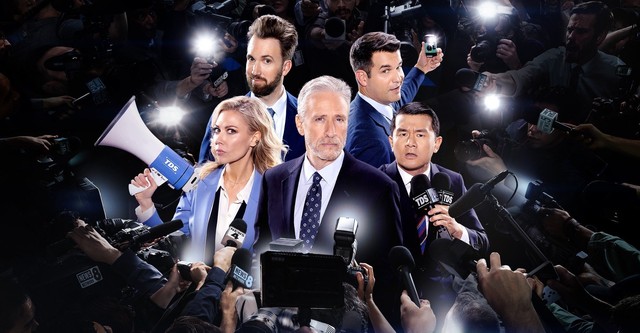
All of this unfolded live in prime time, a decision that amplified both credibility and risk, eliminating the protective buffer of post-production editing or selective framing.
At one moment described by viewers as chilling, the studio reportedly fell into complete silence, as the program presented only documents and records, allowing absence of commentary to become the most powerful statement of the night.
That silence unsettled audiences precisely because it removed distraction, forcing viewers to sit with information rather than reactions, judgment rather than jokes, and memory rather than denial.
The episode brought renewed attention to the story of Virginia Giuffre, carefully framed as a reexamination of publicly discussed allegations and documented records that many felt had faded amid years of deflection and narrative fatigue.
Stewart avoided declaring verdicts or assigning guilt, instead highlighting how influence, repetition, and silence can distort public understanding when uncomfortable claims are left unexamined for extended periods.
Within hours, segments spread globally, translated, clipped, debated, and scrutinized, as journalists, legal analysts, and ordinary viewers reacted to what many described as an unusually direct confrontation with historical avoidance.
Supporters praised the program for restoring focus to evidence rather than personalities, arguing that public discourse had long been shaped by who speaks loudest rather than what documentation reveals.

Critics cautioned that television, even at its most restrained, is not a courtroom, warning audiences against conflating presentation with adjudication or assuming resolution where questions remain legally contested.
Yet even skeptics acknowledged the program’s impact, noting how rarely modern television allows facts to appear without commentary, music, or emotional framing designed to guide interpretation.
What distinguished Exposing the Darkness was not accusation, but insistence, the insistence that viewers confront material directly rather than absorb conclusions filtered through partisan or entertainment-driven lenses.
The program’s structure challenged decades of media habit, suggesting that restraint, silence, and documentation can generate more disruption than outrage when deployed deliberately.

Washington insiders reportedly reacted with unease, not necessarily to the content itself, but to the realization that narrative control weakens rapidly once archival material reenters public circulation.
Social platforms amplified the moment relentlessly, proving once again that silence, when broadcast, can travel faster and farther than carefully worded statements or institutional rebuttals.
For many viewers, the broadcast reframed the role of media, suggesting that its most powerful function may not be explanation or persuasion, but exposure and sustained attention.
The episode reignited debate over why certain stories disappear, questioning whether silence is accidental or cultivated through fatigue, legal complexity, and strategic neglect.
Scholars of media ethics observed that Stewart’s approach revived an older journalistic instinct, prioritizing record reconstruction over narrative comfort, even at the risk of polarizing audiences.
The program was never positioned as entertainment, and its reception reflected that choice, drawing praise, criticism, discomfort, and reflection in equal measure.
Whether viewed as courageous or confrontational, Exposing the Darkness marked a clear inflection point, demonstrating that prime-time television can still disrupt power when it refuses to look away.
In confronting distortion through documentation rather than declaration, the broadcast reminded a global audience that truth does not always arrive loudly, but it becomes impossible to ignore once silence ends.
