
There are moments when a family conflict crosses a line, transforming private pain into something colder, procedural, and impossible to undo. This is one of those moments.
As Prince Harry
prepares to return to Britain, the story unfolding is no longer about reconciliation. It is about suspicion, control, and the collapse of trust.
Sources close to the palace describe an atmosphere thick with unease, where every word is weighed, every movement monitored, and silence has replaced even strained conversation.
According to multiple reports, Harry is now subject to security protocols usually reserved for external threats, not family members returning home.
Insiders claim he may be searched for recording devices before meetings, including any potential audience with
King Charles III.

To many observers, especially those who remember a different royal era, this detail lands with a quiet but devastating weight.
This is no longer a father and son navigating disagreement. It is an institution defending itself against one of its own.
Within the walls of Buckingham Palace, fear of leaks now outweighs hope for healing.
The palace, once defined by discretion and internal loyalty, now appears gripped by modern anxieties of microphones, documentaries, and published words that cannot be recalled.
Officials reportedly worry that any private exchange could resurface in another book, another interview, another global broadcast dissecting royal life.
For Harry, this environment signals something unmistakable. He is no longer trusted to be silent, even in rooms built on generations of silence.
The language surrounding his return is not familial. It is administrative. Risk-based. Defensive.
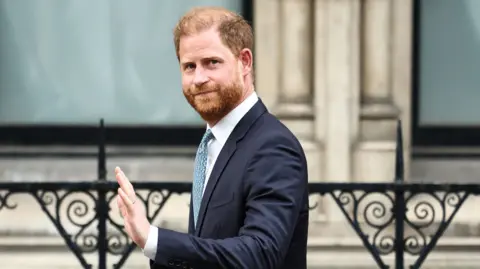
Security sources allegedly refer to him as a potential liability, a phrase that carries brutal implications when applied to a son of the Crown.
To older audiences in Britain and America, this marks a profound shift from the monarchy they grew up respecting.
Once, the royal family absorbed conflict privately, behind walls that protected both dignity and blood ties.
Today, those walls appear to be closing inward, reinforcing distance rather than shelter.
Harry’s ongoing legal battle over personal security adds another layer of irony to the situation.
A man fighting publicly for protection now faces the suggestion that he himself must be searched, monitored, and constrained.
It is difficult not to see the emotional symbolism in that reversal.
Friends of Harry suggest the distrust cuts deeper than any legal disagreement.
They believe the palace fears not just what he might say, but what his presence represents.
A reminder of unresolved grief, of Diana’s shadow, of fractures that were never truly repaired.
For King Charles, this moment may be the most painful test of his reign.
Balancing the authority of the Crown against the instincts of a father is not a dilemma any monarch is trained to resolve.
Yet the machinery of monarchy rarely pauses for sentiment.
Advisers prioritize containment, stability, and the prevention of further damage to the institution.
In that calculus, personal relationships often become secondary considerations.
The result is a situation that feels chillingly impersonal.
Harry returns not as a prodigal son, nor even a difficult one, but as a controlled variable in a risk assessment.
The human cost of that transformation is impossible to ignore.
For a generation that watched two red-haired boys walk behind their mother’s coffin, this chapter feels especially heavy.
The passage of time has not softened everything. In some ways, it has hardened positions.
Public sympathy now divides sharply, but the emotional tragedy remains undeniable.
Trust, once broken, rarely shatters loudly. It dissolves quietly, until only procedures remain.
This is where the royal family now appears to stand.
A palace fortified not against enemies outside, but against memories, words, and one returning son.
As Harry steps back onto British soil, cameras will capture expressions and gestures.
What they cannot capture is the silence behind closed doors, where mistrust has replaced intimacy.
In the end, this story may not be remembered for what Harry says next.
It may be remembered for what the palace no longer dares to say to him at all.
Millionaire Finds His Nanny Selling Candy After 30 Years – and the Truth He Discovered Shattered His Heart
Sometimes destiny writes scripts that not even the most creative filmmaker would dare to imagine.
In Mexico City, among congested avenues and neon lights, a young millionaire believed he had it all: success, wealth, prestige, and the respect of thousands.
But on what seemed to be an ordinary day, as he sped his Lamborghini through the elegant streets of Polanco, one scene shattered all his certainties.
On the sidewalk, bent by age and the weight of life, stood Carmen Morales—the woman who had cared for him in childhood, his nanny, his second mother.
And now… she was selling candy like a beggar.
What Diego Santa María discovered next not only changed his life but also revealed a truth hidden for decades—a lie that had infiltrated his very own family.
Chapter 1 – The Lonely Boy Behind the Golden Gates
Diego Santa María grew up surrounded by luxury, but not by love.
The only son of Ricardo Santa María, a businessman who died in a plane crash, and Isabela Vázquez de la Torre, heiress of one of Mexico’s oldest aristocratic families, his childhood was marked by mansions, parties, and travels… but also by solitude.
It was Carmen, the nanny, who woke up at night when he had nightmares, who made him hot chocolate on rainy days, who taught him to tie his shoes and pray before bed.
While Isabela paraded her son like a trophy at high-society cocktail parties, Diego clung to Carmen’s skirts to feel safe.
“You’re my sunshine, Diego. Never forget: no matter how dark the sky may be, someone will always love you,” she told him.
Those words stayed etched in his heart.
But at the age of 10, everything changed.
After his father’s death, Isabela decided to “modernize” her life. She fired old staff, sold the family ranch, and with coldness dismissed Carmen.
“A child needs to learn to grow without attachments, Diego,” she said as she shut the door behind the woman who had raised him.
Diego cried for days but never saw her again.
Chapter 2 – The Empire Built With Scars
The sad boy became a brilliant young man, but one marked by invisible wounds.
At 16, Diego was already programming software that caught the attention of foreign investors. At 22, he founded Tecnomex Solutions, an artificial intelligence startup that spread like wildfire.
In just six years, his fortune exceeded half a billion pesos.
Mansions, luxury cars, helicopters—nothing seemed enough to fill the emptiness in his chest.
Every night, in the silence of his 2,000-square-meter house, Diego had nightmares of the same scene: Carmen walking away, taking with her the only true affection he had ever known.
“You’re my sunshine…” echoed like a broken song in his mind.
He was rich, powerful, admired. But deep inside, he remained the abandoned boy.
Chapter 3 – The Unexpected Reunion
That afternoon, as he drove his Lamborghini down the avenue, a red light forced him to stop.
And then he saw the scene that stole his breath away:
On the sidewalk, a woman with white hair, wrinkled skin, and simple clothes was selling little bags of candy to passersby.
Diego recognized the look. Even after 30 years, those brown eyes carried the same tenderness.
It was Carmen.
He parked the car, ignoring the horns behind him. He rushed out and approached her.
— Doña Carmen? — his voice trembled.
She raised her eyes and, for a moment, seemed unable to believe it.
— Dieguito?
The bags fell from her hands. The embrace was immediate, long, suffocated by tears neither of them could hold back.
Chapter 4 – The Secret Revealed
Diego took her to a nearby café. Over sips of plain coffee and the city’s background noise, Carmen told her story.
After being dismissed, she sought work in various homes, but Isabela had spread rumors that she was “unfit.”
With her reputation destroyed, all she could find were temporary jobs, until age forced her to sell candy on the street to survive.
— Your mother didn’t want me to tell you anything… but now I must, said Carmen, holding his hand.
Diego looked at her, confused.
— Your father, Diego… he didn’t die the way everyone believes. The accident was no accident.
Diego’s blood ran cold.
Carmen revealed that Ricardo had uncovered a corruption scheme involving the Vázquez de la Torre family. Just days later, the plane he was traveling on mysteriously crashed.
— I overheard conversations in that house, Diego. Your mother knew more than she ever admitted.
Diego felt the world spin. Everything he believed in seemed to crumble.
Chapter 5 – Confronting the Past
Determined to uncover the truth, Diego used his contacts.
He hired investigators, accessed old files, pressured politicians who still owed him favors.
The evidence began to surface: Testimonies from former employees. Strange banking records from the Vázquez family. Falsified maintenance reports of the plane.
With each document, the certainty grew: Diego’s father had been silenced.
And the most painful part: his own mother might have been involved.
Chapter 6 – Between Power and Truth
The dilemma consumed Diego.
If he revealed everything, he would destroy the family’s name and ruin the businesses he had inherited.
If he remained silent, he would live with the lie that had already cost his father’s life and Carmen’s dignity.
He knew he wasn’t alone. Carmen, despite her age and poverty, remained steadfast.
— Diego, I don’t need your fortune. I only want you to know the truth.
Those words rekindled something in him that money had never bought: purpose.
Chapter 7 – The Final Decision
Months later, at a press conference broadcast across the country, Diego Santa María presented the documents.
With a firm voice, he revealed the corruption that had destroyed his family, denounced the accomplices, and promised to use part of his fortune to create the Ricardo Santa María Foundation, dedicated to supporting abandoned children and forgotten elders.
Doña Carmen, seated in the front row, cried silently.
This time, they weren’t tears of sadness, but of pride.
— You’re still my sunshine, Diego. Now, you light up the whole world.
Conclusion
The story of Diego Santa María reminds us of a powerful lesson:
Wealth can buy cars, mansions, and status… but only truth and love have the power to heal the wounds of the soul.
In Carmen, he not only found his nanny again, but also the flame of humanity that money had dimmed.
And by choosing the truth, he proved that even the strongest empires can rise from tears—and that lies, sooner or later, always come to light.
