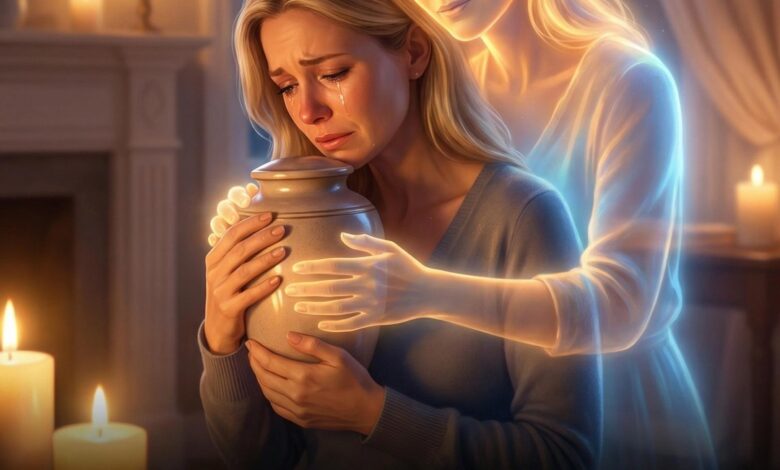
The journey through grief is a landscape devoid of a map, a place where the familiar world suddenly feels fragile and the weight of absence becomes a tangible presence. In the wake of a loss, families often find themselves seeking a physical anchor—a way to bridge the gap between the vibrant life that was and the silence that remains. For many, the memorial urn becomes this anchor. It is more than a vessel; it is a sacred repository of history, a symbol of continuity, and a focal point for a love that has no place else to go. Because an urn represents the physical summation of a human story, the act of handling it requires a unique blend of physical precision and emotional reverence. Learning to manage this responsibility with grace can transform a source of anxiety into a profound ritual of healing.
The first and most critical pillar of caring for a memorial urn is the mastery of physical stability and intentional movement. When we are in the throes of mourning, our motor skills can be compromised by stress; our hands may shake, or our focus may waver. Therefore, the physical handling of an urn must never be a casual act. It is a fundamental rule of thumb to always use both hands, creating a cradle of support. One should never attempt to lift or carry an urn by its lid, handles, or decorative flourishes, as these elements are often ornamental rather than structural. Instead, the primary hand should firmly support the base, while the second hand stabilizes the body of the vessel.
Memorial urns are crafted from a diverse array of materials—ceramic, marble, bronze, hand-blown glass, or biodegradable wood—each with its own specific vulnerabilities. Stone urns can be surprisingly heavy, shifting their center of gravity in ways a grieving person might not expect. Ceramic and glass are susceptible to temperature changes and impact, while metal can be slick. Moving with a slow, deliberate pace is not just a sign of respect; it is a practical necessity to prevent accidental slips. If the emotional weight of the moment becomes too heavy, there is no shame in pausing. Setting the urn on a sturdy, level surface allows the handler to breathe, steady their nerves, and proceed only when they feel grounded. For those who must transport the remains—whether to a new home, a funeral service, or a final scattering site—the use of a padded, specialized carrying case is highly recommended. These containers provide a layer of physical security that allows the family to focus on the emotional significance of the journey rather than the fear of a mishap.
The second pillar involves navigating the complex landscape of logistics, customs, and legalities. In our modern, globalized world, the honoring of a loved one often involves crossing borders or adhering to specific regional regulations. It is essential to recognize that the rules regarding cremated remains are not universal. Different municipalities, states, and countries have varying statutes concerning the scattering of ashes in public parks, waterways, or private lands. Taking the time to research these guidelines is an act of respect for the community and the environment, ensuring that the final tribute is not marred by legal complications.
For those traveling by air, the process requires even more foresight. Most major airlines and security agencies, such as the TSA, have specific protocols for the transport of cremated remains. It is generally advised to use an urn made of “scannable” materials—such as wood, plastic, or non-lead-lined ceramic—so that security screening can be completed without the need to open the vessel, which is a traumatic experience for many. Carrying the proper documentation, including a death certificate and a cremation permit, provides a layer of protection and clarity. Beyond the law, there is the matter of cultural and religious sensitivity. Some traditions dictate a specific timeframe for the placement of remains, while others suggest particular orientations for the urn within a home or columbarium. By honoring these traditions, families often find a sense of collective support, feeling that they are part of a long, historic chain of remembrance that transcends their individual sorrow.
The third and perhaps most vital pillar is the recognition of the urn as an emotional touchstone. We live in a society that often pushes us to move quickly through pain, yet the presence of a memorial urn invites us to linger. It serves as a physical manifestation of a connection that death cannot sever. For some, the urn is a quiet companion, kept in a dedicated “memory corner” of the home alongside photographs and mementos. For others, it is a transitional vessel, holding the loved one close until the family feels ready for a final dispersal.
Many people find that the act of “handling” the urn can be a meditative practice. It provides a rare opportunity for stillness. Holding the cool marble or the smooth wood allows for a moment of internal dialogue—a chance to express gratitude, to whisper a final goodbye, or simply to sit in the presence of memories. This is the “Story of the Day” that never truly ends; it is the ongoing narrative of a life’s influence. There is no singular “right” way to interact with a memorial urn because grief is as unique as a fingerprint. Some families may choose to pass the urn between members during a ceremony, sharing the physical weight as they share the emotional burden. Others may prefer to keep it undisturbed, a silent witness to the life that continues to move around it.
As we look toward the future, the ways we remember will continue to evolve, but the core need for dignity and care remains constant. Whether the urn is a permanent fixture in a family’s legacy or a temporary vessel for a journey toward the sea, it remains the most significant object a person will ever hold. By approaching it with intentionality, adhering to necessary guidelines, and embracing the emotional depth of the connection it represents, we do more than just manage remains. We honor a life. We protect a legacy. And we provide ourselves with the grace necessary to move through the darkness of loss toward a place of enduring peace.
The weight of an urn is not measured in pounds or kilograms, but in the vastness of the love it contains. To handle it with care is to acknowledge that while the body may be gone, the essence of the person—their laughter, their wisdom, and their impact—is something that should be cradled with both hands and a heart full of reverence.
