
Behind the polished headlines, a quieter story is unfolding, one shaped less by scandal and more by inherited pressure, generational memory, and an uncle’s lingering unease.
Prince Harry, long distanced from royal life, is reportedly troubled not by protocol, but by the emotional future awaiting his young niece, Princess Charlotte.
For readers in Britain and America who have watched families drift apart, this concern feels intimate, almost painfully familiar in its restraint and regret.
Charlotte is growing up inside an institution that promises privilege, yet quietly assigns roles before childhood has a chance to breathe.
Harry’s worry does not center on titles or ceremonies, but on expectations that settle early and remain long after innocence has passed.
He knows this burden personally, having lived for decades beneath a label that shaped identity before self understanding fully formed.
The phrase “spare” is never spoken lightly, especially by those who survived its psychological weight under constant public comparison.
William and Catherine have chosen a visibly different path, favoring normalcy, emotional grounding, and distance from some royal traditions.
To many older observers, this reflects modern parenting values, shaped by hard lessons learned across generations of public and private sacrifice.
Yet Harry fears that no matter how loving the household, history has a way of reasserting itself without permission or warning.
Royal structures move slowly, often indifferent to intention, and children eventually inherit narratives they never agreed to carry.
Charlotte’s position, between an heir and a younger sibling, places her subtly at the center of that quiet imbalance.
Harry understands how quickly affection can coexist with invisibility, and how easily duty eclipses personal voice within royal walls.
His concern reportedly persists despite warnings to remain silent, underscoring how family worry rarely obeys political boundaries.
For readers aged forty five to sixty five, this echoes memories of unspoken roles assigned within families long before adulthood.
Many recognize the ache of watching history repeat, especially when past wounds were never fully acknowledged or healed.
Harry’s perspective is shaped by distance, but also by clarity earned through loss, isolation, and painful public reckoning.
He no longer speaks as a prince protecting relevance, but as a man wary of cycles that quietly damage from within.

Charlotte, still young, symbolizes possibility, but also vulnerability inside a system that measures lives by hierarchy.
Her parents may offer warmth and balance, yet the institution surrounding her remains unchanged in its expectations.
This tension between modern parenting and ancient structure sits at the heart of Harry’s unspoken alarm.
It raises uncomfortable questions about whether love alone can shield a child from roles history insists upon enforcing.
For older audiences, this mirrors workplace hierarchies, family businesses, and traditions that outlast personal intention.
Harry’s worry is not dramatic, but subdued, the kind that settles into silence rather than erupting into confrontation.
It is the concern of someone who knows how quickly childhood becomes narrative, then destiny, under public scrutiny.
The royal family often speaks of duty, but rarely of emotional cost paid quietly behind closed doors.
Harry’s distance has given him perspective, but also the ache of watching from afar, powerless to intervene.
Charlotte’s future remains unwritten, yet shadowed by precedents no child should have to inherit unconsciously.
This story resonates because it is not truly about royalty, but about families, legacy, and protection delayed.
In that sense, Harry’s worry belongs not to a prince, but to anyone who has ever feared history might repeat itself.
The Gentleman’s Silence: How Prince William Quietly Defused Trump’s Windsor Visit

Prince William, often described as measured and composed, showed that true authority does not always speak loudly. Instead, he answered Trump’s bluster with restraint, subtlety, and grace.
A Calm Amid the Storm
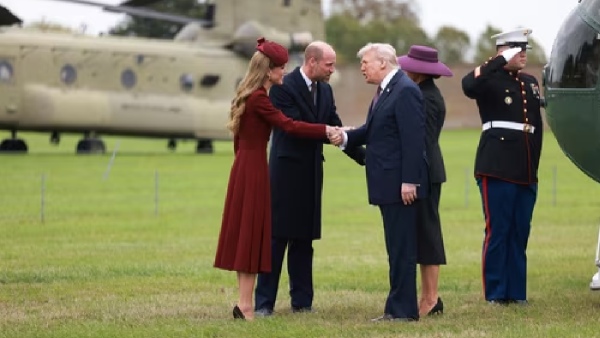
At the banquet, the contrast was striking. While Trump’s presence dominated conversation, William kept his focus elsewhere. He smiled, engaged with Kate, and spoke warmly with other guests. His quiet detachment was not aloofness, but strategy: a way of refusing to fuel tension without letting the mood sour.
The Chair That Spoke Volumes
The evening’s most telling moment came when Melania prepared to sit. William rose from his seat, stepped forward, and pulled out her chair with natural ease. It was a small act of courtesy, but it carried the weight of centuries of royal tradition.
Without uttering a word, William reminded the room — and Trump himself — that etiquette and respect are the crown’s strongest weapons. Where Trump disrupted, William restored balance. Where arrogance sought to overshadow, courtesy reclaimed the light.
A Message in Manners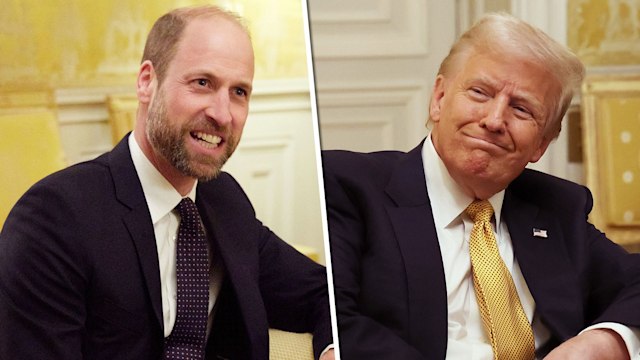
After dinner, William went further. In a brief exchange with Melania, he asked about her travels, acknowledging her presence with genuine interest. It was disarmingly simple — and yet profoundly effective. In a few kind words, he reframed the evening, showing the world that
dignity can be louder than defiance.
What People Remembered
By night’s end, few remembered Trump’s table manners or interruptions. What lingered instead was the image of William, smiling quietly, treating a guest’s wife with the courtesy Trump failed to show.
It was a reminder that leadership is not only about speeches or power plays. Sometimes, it is about restraint. Sometimes, it is about grace under pressure. And sometimes, it is about pulling out a chair.
