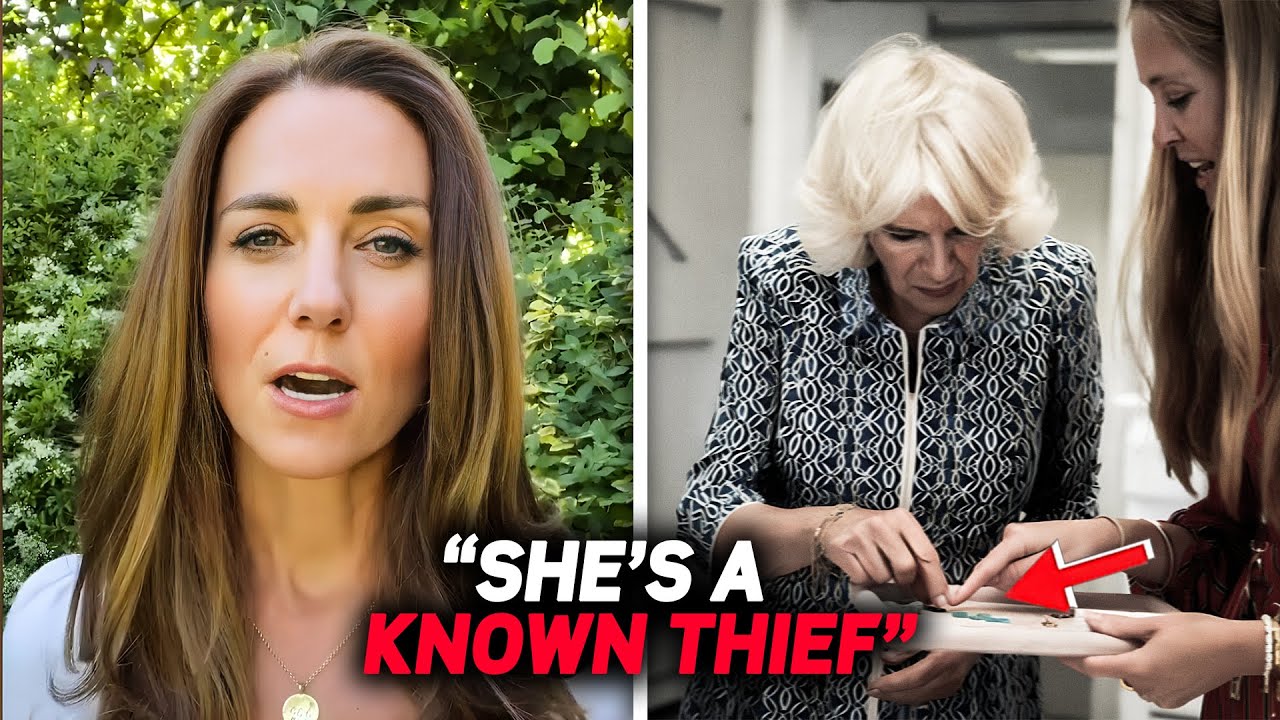
Behind the gilded doors of Buckingham Palace, whispers have grown into a storm. The battleground? Not politics. Not protocol. But jewelry. Yet these aren’t trinkets or baubles—they are the most precious relics of royal history, carrying with them the weight of memory, duty, and loss.
And at the heart of this latest confrontation stands Kate Middleton—usually the very image of grace and diplomacy—who stunned insiders by confronting Queen Camilla over what she discovered was nothing short of an attempted redirection of Princess Diana’s legacy.
A Grandmother’s Legacy
For years, it was understood that certain pieces of Diana’s jewelry would one day belong to Princess Charlotte. The symbolism mattered deeply: a grandmother Charlotte never met, reaching across time to her granddaughter through heirlooms that had defined her.
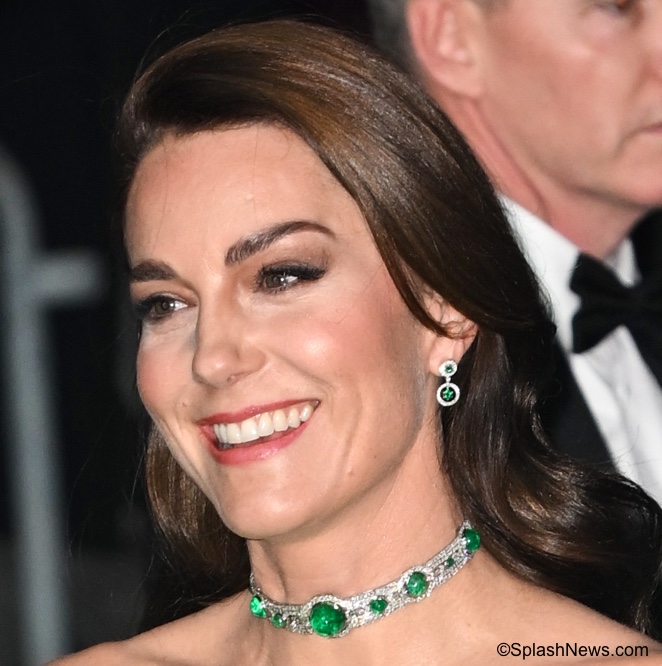
Among them were Diana’s Spencer tiara—the one she wore on her wedding day—Queen Mary’s lover’s knot tiara with its distinctive pearls, and an emerald necklace Diana once wore during state visits in the 1990s. To Prince William, these items were priceless connections to his mother. For Kate, they were a way to ensure Charlotte grew up not only with jewels, but with tangible reminders of Diana’s spirit.
But palace insiders noticed troubling shifts after Charles ascended the throne and Camilla assumed her role as queen. Pieces that had been designated for Charlotte’s future suddenly appeared on inventory lists as “available for current use.” Even more alarming, some had reportedly been diverted to Camilla’s own relatives—especially her granddaughter, Lola Parker Bowles, who, though beloved by family, holds no royal title and no place in the line of succession.
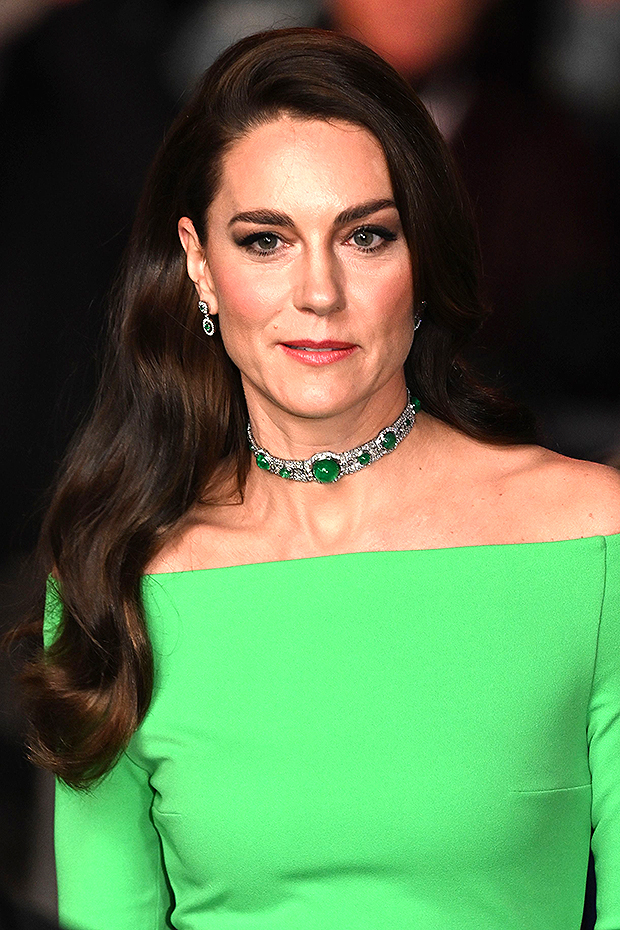
Kate’s Discovery
At first, the changes seemed like administrative shuffling. But Kate—ever meticulous, ever protective—sensed something was wrong. She began digging. With the help of royal archivists and even former staff members of Diana, Kate pieced together a disturbing paper trail: records altered, heirlooms reclassified, and documentation showing jewels once earmarked for Charlotte being redirected into Camilla’s sphere.
What Kate uncovered was not a clerical error. It was a deliberate reallocation, carefully threaded through palace bureaucracy, cloaked in official language but unmistakable in intent.
The Transformation of Kate
Known for her composure, Kate could easily have raised the issue quietly, behind the curtain. Instead, she became something few had ever seen: fierce, unbending, and resolute.
For weeks, she gathered evidence—emails, inventories, witness accounts. She built a case so thorough it could not be brushed aside as misunderstanding or melodrama. This was not about family preference. This was about deception, abuse of authority, and the sanctity of Diana’s memory.
The Confrontation
It happened at Kensington Palace during what was meant to be a routine family gathering. With King Charles away on a diplomatic mission, the timing fell to Kate.
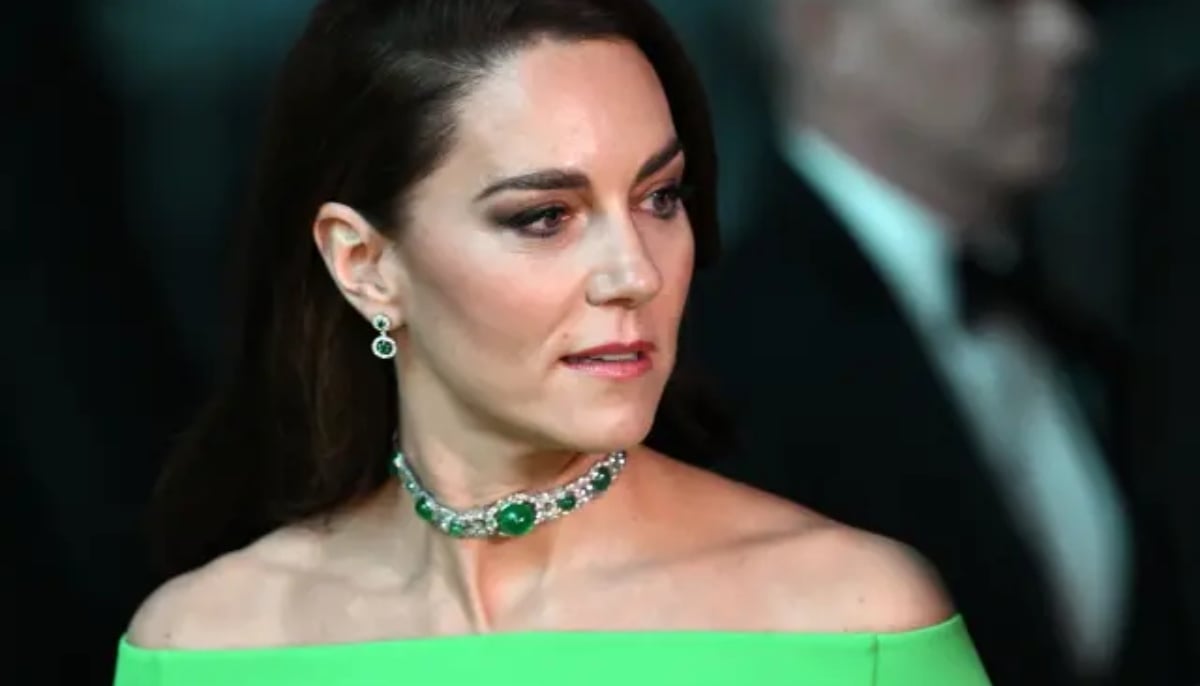
When Camilla arrived, expecting conversation, she found instead a daughter-in-law transformed into a warrior-mother. Kate presented her folder of evidence: line by line, item by item, how Diana’s jewelry had been reassigned. Witness statements. Altered documents. The emerald necklace that had somehow been shifted from Charlotte’s name to Camilla’s granddaughter.
Camilla tried to deflect, suggesting miscommunications or staff errors. But Kate had left no space for excuses. Every fact had been cross-referenced, every signature confirmed. What Camilla faced was not an emotional plea but an irrefutable indictment.
Diana’s Spirit in the Room
The confrontation was not about gemstones. It was about what Diana had meant—to William, to her grandchildren, to the public. Kate made it clear: allowing these heirlooms to drift outside Diana’s bloodline would be to betray her memory. And Kate would not allow that.
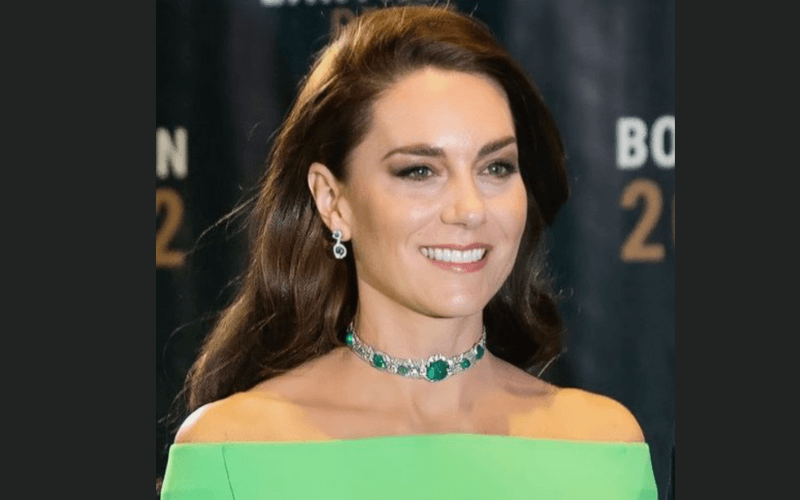
Days later, Kate delivered a message without words. She appeared at a charity gala at St. James’s Palace wearing the emerald necklace at the center of the dispute. Cameras flashed, headlines screamed, and the public understood instantly: Kate had not only fought, she had prevailed.
Public Uproar
The reaction was immediate and overwhelming. Hashtags like #JusticeForCharlotte and #ProtectDianasLegacy trended worldwide. Royal watchers hailed Kate as the guardian of Diana’s memory. Across Britain and beyond, people saw in her not only composure but courage.
For Camilla, the fallout was devastating. Years of painstakingly built public acceptance unraveled. Old resentments resurfaced. The ghost of Diana—never far from the British imagination—loomed larger than ever.
A Shift in Power
Behind the scenes, King Charles was caught between roles: husband to Camilla, but father and grandfather to William, Kate, and Charlotte. Insiders whispered of sleepless nights as Charles sought to smooth tensions while ensuring the jewelry was restored to its rightful heir.
But the broader impact was clear. Kate’s intervention reshaped palace dynamics. She was no longer just the graceful duchess or dutiful princess. She had become a force in her own right—respected, formidable, and unafraid to defend her children’s legacy.
Palace staff worked overtime to restore original inheritance records. Archivists ensured Diana’s jewels were safely reclassified for Charlotte’s future. And quietly, a new respect for Kate settled within the walls of Buckingham Palace.
The Bridge Between Past and Future
Princess Charlotte, blissfully unaware, continued her childhood—school runs, family outings, and the occasional wave to adoring crowds. But one day, she will know: her mother fought for her. Not for vanity, but for memory. For Diana.
The public saw in Kate’s stand something larger than jewels. They saw continuity—Diana’s compassion, her warmth, her spirit carried forward. And they saw Kate, not as a background figure, but as the bridge between past and future, the guardian of tradition, and the protector of her daughter’s rightful inheritance.
A Lesson Etched in Stone
The jewelry scandal will fade, as scandals always do. But the lesson remains. Legacies are not playthings. They are responsibilities, written in love and sacrifice, carried forward by those willing to defend them.
Kate’s defense of Charlotte’s inheritance was more than a family dispute. It was an act of loyalty—to William, to Diana, to the monarchy itself. And it cemented her role as something Camilla has struggled to achieve: a woman trusted by the public to safeguard what truly matters.
The Day the Palace Held Its Breath: Princess Charlotte’s Silent Refusal That Shook the Royal Stage
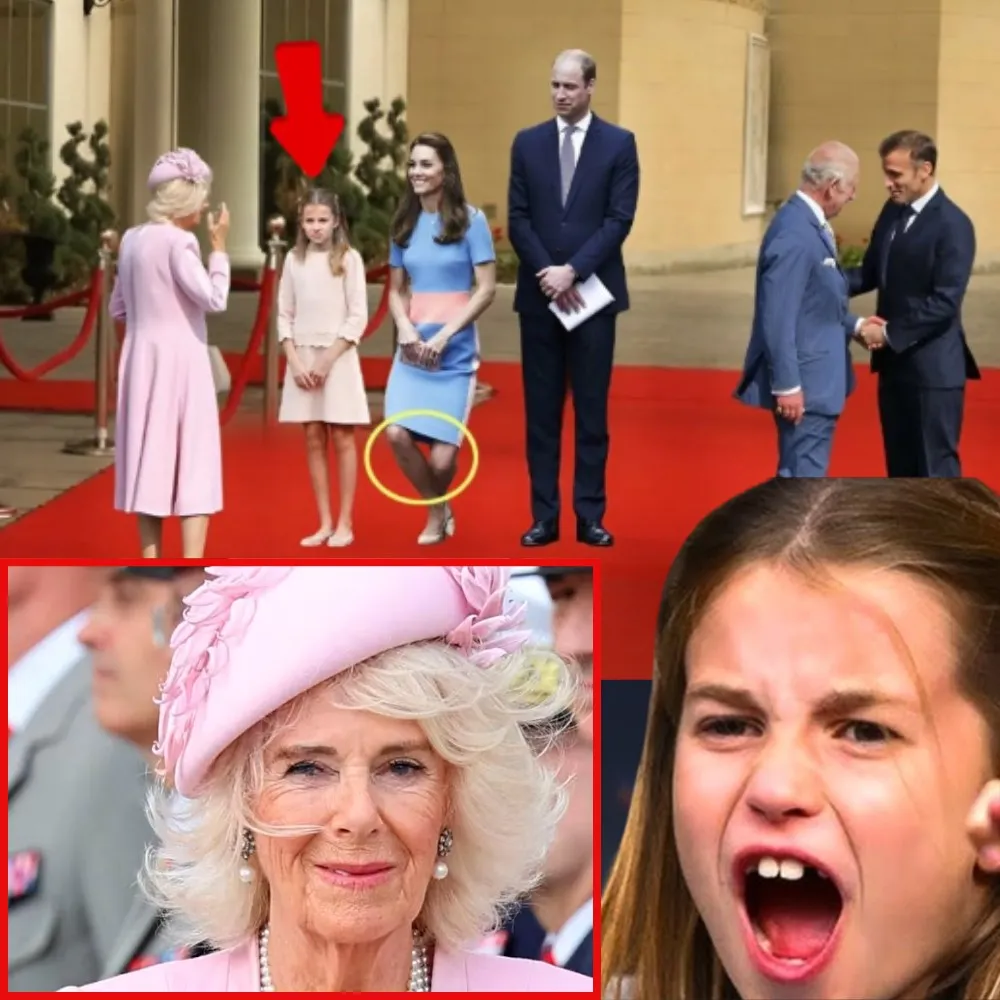
It was meant to be a day of order, precision, and royal unity. The red carpet rolled out beneath a bright summer sun, the air thick with ceremony as dignitaries and royals moved in well-rehearsed harmony. Every step, every gesture was meant to reflect centuries of tradition.
And yet, amid the choreographed elegance, a moment unfolded that no one could have predicted — a moment so small in action, but monumental in meaning.
Princess Charlotte, just eight years old, stood poised beside her mother, Catherine, Princess of Wales. Her dress was simple and pretty, her hair neatly arranged. Ahead of her stood Queen Camilla, radiant in pink, waiting for what royal etiquette demands: a curtsy from her step-granddaughter.
But it never came.

Those close enough to witness it say the pause was unmistakable. The young Princess did not move into the customary gesture. Her hands remained clasped, her eyes steady. The silence between them seemed to stretch far longer than the few seconds it truly lasted.
For onlookers, it was shocking — not for its drama, but for its defiance. The curtsy is not just a tradition; it’s a public acknowledgment of rank and respect. And in the world of royal optics, such gestures carry weight.
Catherine’s presence beside her daughter was calm, her smile unwavering. Prince William stood nearby, his gaze fixed ahead. King Charles was engaged in polite conversation with France’s President Emmanuel Macron, seemingly unaware of the ripple building just a few steps away.
The cameras, however, caught everything.

For some, Charlotte’s choice was seen as the bold will of a child who has inherited her grandmother Diana’s unflinching spirit. To others, it was an innocent oversight, a fleeting moment magnified by the watchful eyes of a global audience. But either way, the symbolism was impossible to ignore.
In an age where every royal gesture is analyzed, Princess Charlotte’s non-curtsy struck a chord. For supporters of the Princess of Wales, it was an almost poetic statement — a subtle reinforcement of loyalty to her mother, and perhaps to the late Princess Diana, whose own complicated history with Camilla is well documented.
Camilla’s reaction was as composed as any seasoned royal could muster. There was no visible sign of offense, no break in her public smile. But those familiar with the undercurrents of palace life know that even the smallest deviations from protocol can echo through its halls.
In the hours that followed, social media lit up. Some praised Charlotte for her spirit, others chastised what they saw as a breach of respect. But among the 45–65+ generation who have followed the Windsors for decades, the moment stirred deeper feelings — memories of past tensions, questions about the monarchy’s future, and the realization that even the youngest royals can spark a storm.

Royal etiquette experts were quick to weigh in, noting that children are not strictly required to curtsy until they reach a certain age. Still, in the theater of monarchy, optics often matter more than rules. And in this theater, Charlotte’s stillness was the loudest act of the day.
There is, of course, another layer — the familial one. Princess Charlotte is growing up in a family where history, legacy, and personal loyalties intersect in complex ways. She will have heard stories, perhaps seen the photographs of her grandmother Diana, and she certainly understands, even in a child’s way, the unique bond she shares with her parents.
Those who knew Diana can’t help but see echoes of her in this moment. Diana had her own quiet rebellions, moments when she chose authenticity over protocol, truth over convenience. Could it be that Charlotte, without fully realizing it, was channeling that same unyielding honesty?

Palace insiders have offered no official comment, perhaps wisely. The monarchy thrives on continuity and stability, and sometimes silence is the best tool for preserving both. Yet, behind closed doors, it’s hard to imagine the moment passed without discussion.
In the end, the truth of why Charlotte did not curtsy may be simple — or it may be layered in ways even she cannot yet articulate. What is certain is that, for a few seconds on a red-carpet morning, an eight-year-old princess reminded the world that the future of the monarchy will not be written solely by tradition.
It will be shaped, too, by the personalities and choices of those who inherit it — even if they’re still learning how to spell the word “protocol.”
As the day’s engagements continued, the moment faded from the immediate proceedings. But in the minds of those who saw it, and in the photographs that will be studied for years to come, it remains: a tiny act, a steady gaze, and the whisper of change in the royal air.
